Monday, June 30, 2014

VCBH: The Simple Life


Viva Carlos!

Other than money, what would make your horse life simpler?

The answer that first came to mind would be a shorter commute, because driving to and from the barn sucks up valuable time that I'd rather spend with ponykins instead of on the road.

But reading through the other answers of this blog hop helps me to appreciate (a) that I have a dependable car, (b) that my commute isn't nearly as bad as others', and (c) that there will just never be enough time.

So my final answer to this question is that getting over my hesitation to spend money on horsey things would make my horse life simpler. My husband and I make good livings and we are very fortunate to have financial security. But for some reason I have this mental and emotional block from spending it on horsey things without analyzing the purchase to death first. Its especially burdensome regarding special one-time purchases, like our new Thinline pad which I had to think about for at least a month before buying. 
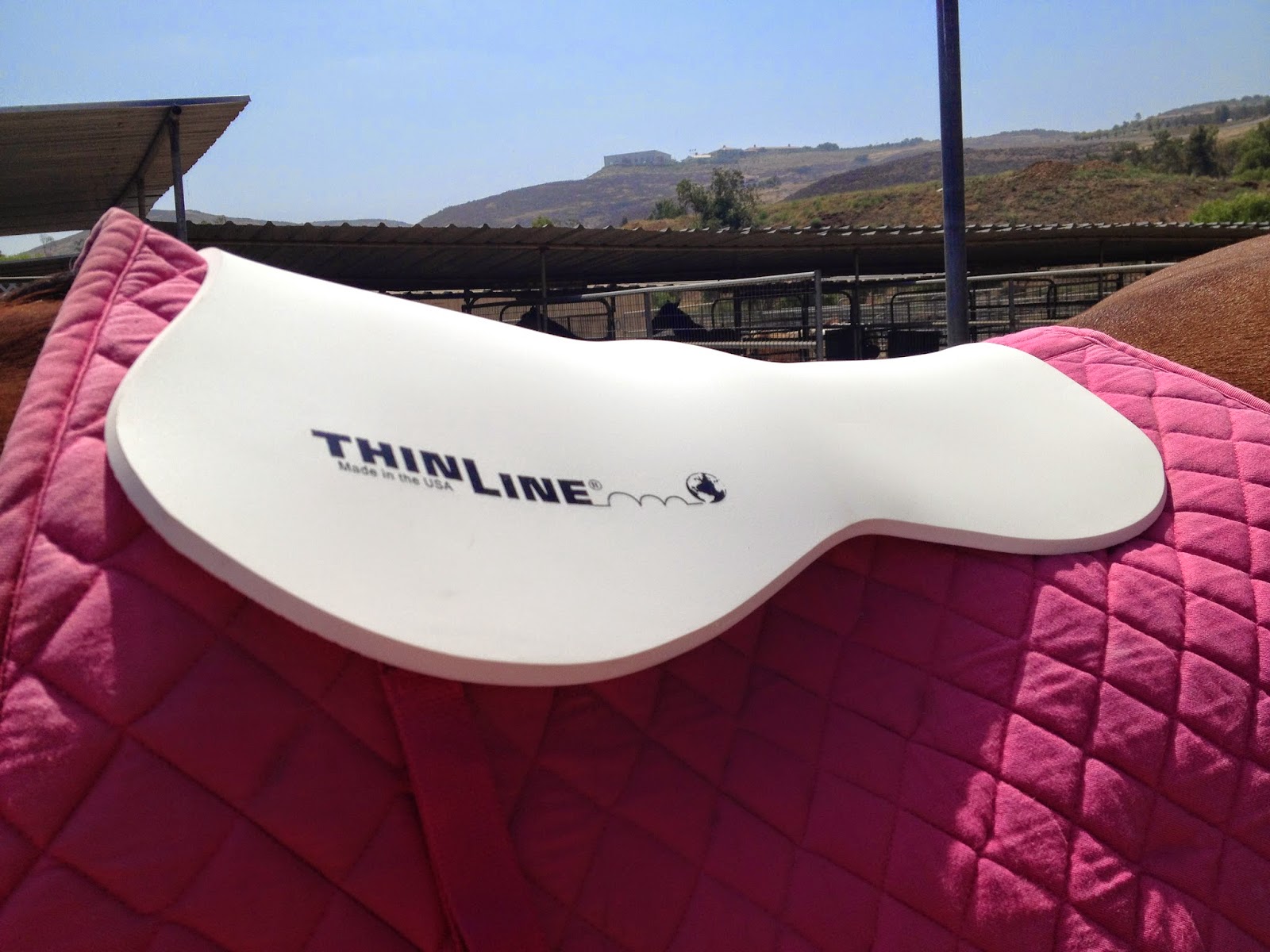

Its just this weirdness that I have. I don't really know where it comes from or why it persists, but I do think that me feeling more okay with spending money on horsey purchases would make life simpler.


Q2 Review & Q3 Goals

2014 Goals
Q1 Review & Q2 Goals

Q2 Horsey Goals:
  1. Work on my lower leg stability while jumping. Some success. Its improving bit by bit, but needs more work.
  2. Work on better upper body posture for dressage (stop leaning forward!). Marginal success. Needs more work.
  3. Focus on Hemie's flexibility and bending the whole body. Success. We focused on it, and he does supple up when asked.
  4. Add more lateral exercises to rides (shoulder-in, haunches-in, etc). Success. Added in most rides.
  5. Continue working on steadier connection and hind-end engagement. This has taken up most of the time, energy, and effort. 3 steps forward, 2 steps back, a few steps sideways, heeeey macarena!
Q2 Non-Horsey goals:
  1. Continue garage organizing - focusing on my crazy horse pile. Great success. Then my parents started using my garage for storage and it has started going downhill again. So really, moderate success.
  2. Create a more efficient workout schedule and stick to it! Success - I'm doing the "starting strength" program 2 to 3 times per week.
  3. Buy or make birthday cards so I always have a ready supply. Success. They were on sale. Sending them out in a timely manner....not so great.
  4. Track all horse show expenses in my show binder. Meh...didn't do a great job with this, but better than nothing I guess.

July-August-September/Q3 Goals

Horsey
1. Focus on Hemie's enjoyment of flatwork.
2. Relaxation, relaxation, relaxation.
3. Schedule a clinic OR do an XC school at a new location.

Non-Horsey
1. Continue with garage organizing.
2. Continue with working out and eating healthfully.
3. Review short, medium, and long-term financial goals with hubby.


Saturday, June 28, 2014

You talkin' to me?

Lately there have been a number of Facebook posts from horse trainers I follow that speak to me. Normally horse riding/training posts are interesting in a general sense, but lately there have been a good number where the topic du jour feels particularly relevant to my situation. Two quick examples:

Denny Emerson's posts about negotiating aids:

"When I was starting out, years back, the situation here, a green, resistant horse, not yet quiet and confident in the connection between the seat, leg, hand----It would have made me nervous, stronger in my hand, stiffer in my arms---

Then, if the situation escalated, as would have been almost inevitable, I`d have gotten more frustrated, would have been thinking things like, "Mare, damn it, do what you`re told", and I`d probably have gotten into at least a strong argument, maybe a fight.

I say this because I see this so often with younger and greener riders and trainers, not knowing how to quietly negotiate, more likely to go to force, even draw reins, standing martingales, stronger bits, the remedies we seek out of ignorance and frustration.

It takes time, plus good direction from a wiser trainer, for the less experienced to simply learn how to softly negotiate, and be willing to take the extra weeks and months to build into the horse trust and strength and understanding of the aids.

Too many riders go all their lives without making the transition from force to finesse, but it doesn`t have to be that way."
June 21


Jane Guzman's post about relaxation:

"I rode Xuxa this morning. She is getting so much stronger in her back and beginning to take a longer stride. Something bothered her during the schooling session. It could have been the noise of a horse in the round pen, could have been an insect bit,could have been the other horse leaving. How knows. It does not really matter what scares a horse - the important thing is how to deal with spooks. I think the only way to truly train any horse is with a consistent, firm, fair program. Relaxation is firstly rider mental relaxation - confidence in your position and aids, next physical relaxation. If you are not physically relaxed the horse will pick up on your tension and never mentally relax. Only when the horse is mentally relaxed and tuned in to the rider can one develop physical relaxation in a horse. One may start a schooling session thinking of specific training exercises - but ride in the moment."

June 26

(emphasis in both posts are mine)

Story of my life
From Equestrian Memes

On Thursday's lesson, we really focused on having Hemie connected to the left rein - no matter which direction we were tracking. This involved some counter-bending, blocking the right shoulder from falling out, and being square through turns. But overall it was successful, without any issues from Hemie.

We also focused on really getting him in front of the leg, which was especially hard at our stretchy trot where he was going fast with his neck way down but nose behind the vertical. My inclination was to slow him down first, when Laurie actually had me kick him on to better connect with the reins before slowing down. It took a leap of faith, but worked. That's something that I have a hard time doing on my own in practice rides.

I am starting to really pay attention to my stress level/anxiety/tension when I ride, as a way to address Hemie's. So far, I find that if I take a deep breath and relax, Hemie will do the same within just a few strides. I'm going to continue to be mindful of it because I suspect it holds the keys to better and faster relaxation - for both of us.


Friday, June 27, 2014

Photo Challenge

Time to participate in my own mid-year photo challenge. 
Thanks to those who are participating - everyone is welcome to join!

1. Between-the-ears shot.
Bunnies. Bunnies everywhere.

2. Anything blooming at your barn.


3. A picture of your horse taken from a random/weird/artistic angle.


4. The most attractive horse at your barn other than yours.
Chester


5. Bath time photo.
"Uh Mom...what are you doing?"

6. A sweet picture of you and your horse.


get the InLinkz code

Thursday, June 26, 2014

Week so far

Tuesday
We did a jumping practice ride, channeling our inner hunter: rhythmical, relaxed, using our whole arena. He tripped a few times throughout the ride, including once just 2 strides from a jump, causing me to drop my reins. We made it over just fine anyway, woot woot! I think he was tripping because of needing a hoof trim.

Then I myself almost tripped on a bunny. Seriously they are everywhere right now.


Wednesday
Hooves got trimmed by the fabulous Sabine. Then Hemie got a bit-up and lots of cookies.


Tonight (Thursday) we're getting a dressage lesson, then not sure about Friday but likely a jump lesson on Saturday.


Wednesday, June 25, 2014

Safety is a choice

I don't know if I've mentioned this before, but I am the lone equestrian in my family. Furthermore, my father knew Christopher Reeve personally. While growing up I was forbidden from doing any jumping; Papa thought it was just too dangerous. So I grew up riding at a saddleseat barn.

Saddle optional. Helmet not!
Coming to eventing as an adult, I get the impression that I'm more safety conscious than lots of other riders, especially as compared to people who grew up in the sport.

Here are some of the choices I make with safety in mind:

- I wear a helmet every ride.

- I wear my impact vest, and typically my air vest as well, while jumping. This includes jumping in lessons, on my own practicing, or at shows. I typically wear my impact vest for trail rides too.

- Last year I chose to do Intro level for our first few outings to help me feel more confident and therefore help ensure safe and positive experiences for both Hemie and myself.

- I listen to my body. If I'm not well enough to ride, I don't. I also listen to my gut instincts. If something isn't feeling right, I take a moment to figure it out instead of just plowing ahead.

- I take regular lessons with a trainer.

- I learn from my mistakes. And with the help of this blog, I don't forget them!

All suited up for SJ

I wasn't always so safety conscious. I rode without a helmet for many years in fact. But a post about Riders4Helmets from Nicku of The Polka Dot Periodical several years back inspired me to strap one on every ride.

I'd like to pay it forward and hopefully inspire someone to think more about safety. July 12, 2014 is the 5th annual International Helmet Awareness Day. Many helmet retailers and tack shops will offer great discounts on new helmets and offer helmet-fitting workshops. If you've been thinking of upgrading your helmet or adding one to your collection, mark your calendar for this date so you can support a great organization's program and give your wallet a little break too.

https://www.facebook.com/riders4helmets


Monday, June 23, 2014

Watch and Learn

Yesterday I went to Shepherd Ranch Horse Trials in Santa Ynez to watch the stadium jumping rounds and some cross-country schooling following the show. Its the closest HT to my home, and it has a spectacular view. The weather was just perfect.

Love this view!

Walking the stadium course
 
Brought my pup.

I spent most of the day watching stadium jumping. For the most part, each division was run in reverse placing order (last-placed rider going first, first-placed rider going last) so that it created more pressure and excitement for the top placed riders. Generally speaking, this resulted in seeing some of the worst stadium rounds first (less skilled riders, greener horses, etc) and then watching it progressively look safer and smoother. Here were my main takeaways as a spectator:

  • You have 45 seconds from the buzzer to get between the start flags. 45 seconds is longer than you think it is. If you are nervous or your horse is looky-loo, use those 45 seconds to (a) have a gander at the jumps, and (b) develop a quality canter. Almost no one took advantage of the 45 seconds (even with a giant count-down screen nearby).
  • There is simply no substitute for good riding basics. Heels down, chin up, shoulders back. They lead to confidence. Or confidence leads to good riding. Either way, no matter how the horse looked (hot or no, green or no), good riding always outperformed bad riding.
  • Even when you're nervous, you have got to let go of your horse's face at and over the jump. Ride with a jump strap people! If you get nervous and need to hang on, hang on to that and let your poor horse have his head over jumps!  One awkward jump led to an entire round of face-snatching on more than one occasion. 
  • Rhythm and straightness. Always.


After stadium jumping wrapped up, they opened the cross-country course for schooling. I watched several groups of riders do XC.

My friend J.H. brought her handsome 4-year-old horse Danny - it was his first XC schooling and only 3rd time ever jumping! He was a very willing boy.


The fabulous George was there with his new owner, L. They had a fabulous first schooling together, even giving other horses a lead over some giant jumps!


It was a bit crowded with lots of horses schooling as well as spectators. I mostly watched 2 groups of trainers and riders, and it is interesting to compare different approaches.

The main takeaways from watching XC:
  • Ride all the way to the base of the fence. A lot of riders stopped adding leg 3 or 4 strides away.
  • Don't hope it will happen - ride with a purpose to *make* it happen.
  • Safety first! Pay attention to your body and stop jumping if you're feeling weak or tired. XC is dangerous enough as it is.
  • Don't drill one bad/awkward fence over and over; do another fence or two then come back to it.
  • You cant have quality jumps without a quality canter (or trot). Period.

Overall it was a lovely day and I'm so glad I came to watch. I walked the BN cross-country course and can't wait to compete again.